
Hare, Egg, and Paganism: Why Easter is Actually an Ancient Spring Festival
Hare, Egg, and Paganism: Why Easter is Actually an Ancient Spring Festival
Colorful eggs, hidden treats, and blazing fires – for many, these are the fixed rituals of the Easter season. In Christian faith, we celebrate the resurrection. But if you look closer, you'll notice: neither egg-laying bunnies nor decorated bouquets are mentioned in the Bible.
In fact, many of our most beloved Easter customs are ancient. They are deeply rooted in the pre-Christian traditions of the Celts and Germanic peoples. Easter is, genetically speaking, a festival of new beginnings and nature. Let's discover its fascinating, “pagan” roots.
1. The Name: Legacy of a Goddess?
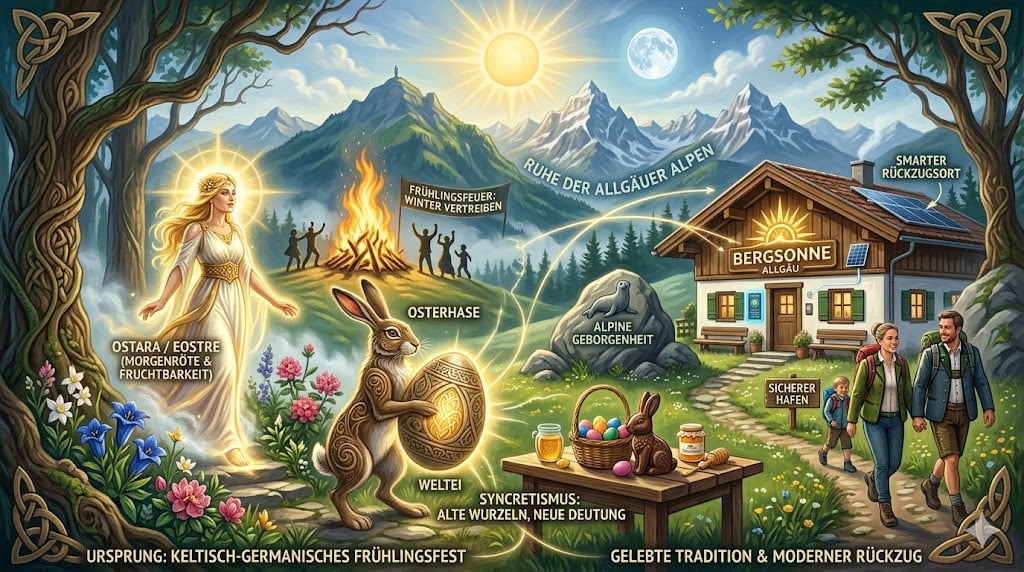
Even the name “Ostern” (English “Easter”) is probably not derived from a biblical term. The most common theory traces it back to a Germanic goddess named Eostre (or Ostara) – the goddess of dawn, spring, and fertility. Her festival at the spring equinox honored the return of light. The name itself denoted a seasonal time of awakening.
At Bergsonne Allgäu, we understand this longing for light and clarity. If you want to shed the burdens of everyday life, our smart retreat is the perfect place to celebrate your own new beginning. Here you will find the right rooms for your break.
2. The Timing: In Harmony with the Stars
Why does the date of Easter change? Because it is not based on a calendar day, but on nature. Easter is always on the first Sunday after the first full moon of spring. This connection with the beginning of spring is a direct legacy of ancient nature religions. It was the magical moment when light conquered darkness – a cosmic fresh start that we can still deeply feel today in the unwavering tranquility of the Allgäu Alps. Experience the revitalization of nature and find new strength.
3. The Symbols: Ancient Signs of Vitality
Our Easter symbols were powerful signs millennia before Christ:
The Easter Bunny: Known for its reproductive power, it was considered a symbol of fertility and was the companion of the spring goddesses.
The Easter Egg: The egg, which appears dead but holds life, is a universal sign of creation. Even in antiquity, brightly colored eggs were given as gifts for the spring festival.
Conclusion: A Festival for All Senses
When we celebrate Easter today, we are observing a festival with deep roots. The church cleverly reinterpreted pagan customs: the resurrection of nature became the resurrection of Christ.
Knowing that the hare is a messenger of an ancient goddess connects us with the eternal cycle of nature. We at Bergsonne Allgäu invite you to rediscover this connection with us. Enjoy the alpine security and find your personal safe haven with us. Also discover our culinary delight offers.


